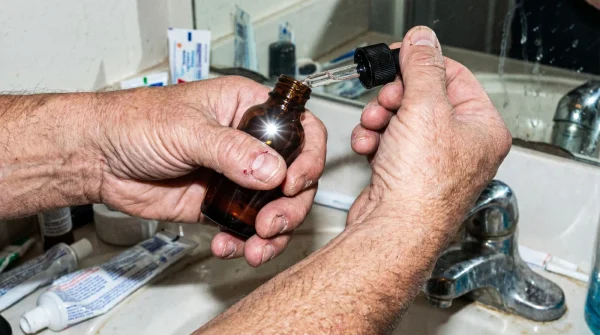
Standing by the bathroom mirror, the tap dripping slightly, you smooth that familiar, slightly pearlescent cream across your forehead. It smells vaguely of summer holidays and sterile laboratories, an invisible shield you have been taught to trust blindly before facing the grey British morning.
You slather it on, confident that the high-street bottle sitting on your shelf is a triumph of modern dermatology, a non-negotiable step in preserving your complexion from premature ageing.
But the reality unfolding in regulatory offices tells a starkly different story. Behind closed doors, away from the glossy marketing campaigns, a quiet shift is happening. The very filters you are rubbing into your skin to prevent harm are currently the subject of urgent, hushed conversations among UK health officials.
What feels like protection is actually a chemical gamble. European toxicity reports have recently handed down findings that shatter the assumed safety of our most popular chemical sunscreens, linking specific trending UV filters directly to thyroid disruption.
The Invisible Intruder
Think of traditional sun protection as a heavy winter coat. It sits on the surface, taking the brunt of the weather. Chemical filters, however, operate more like a sponge that absorbs directly into your system, pulling the environment inward.
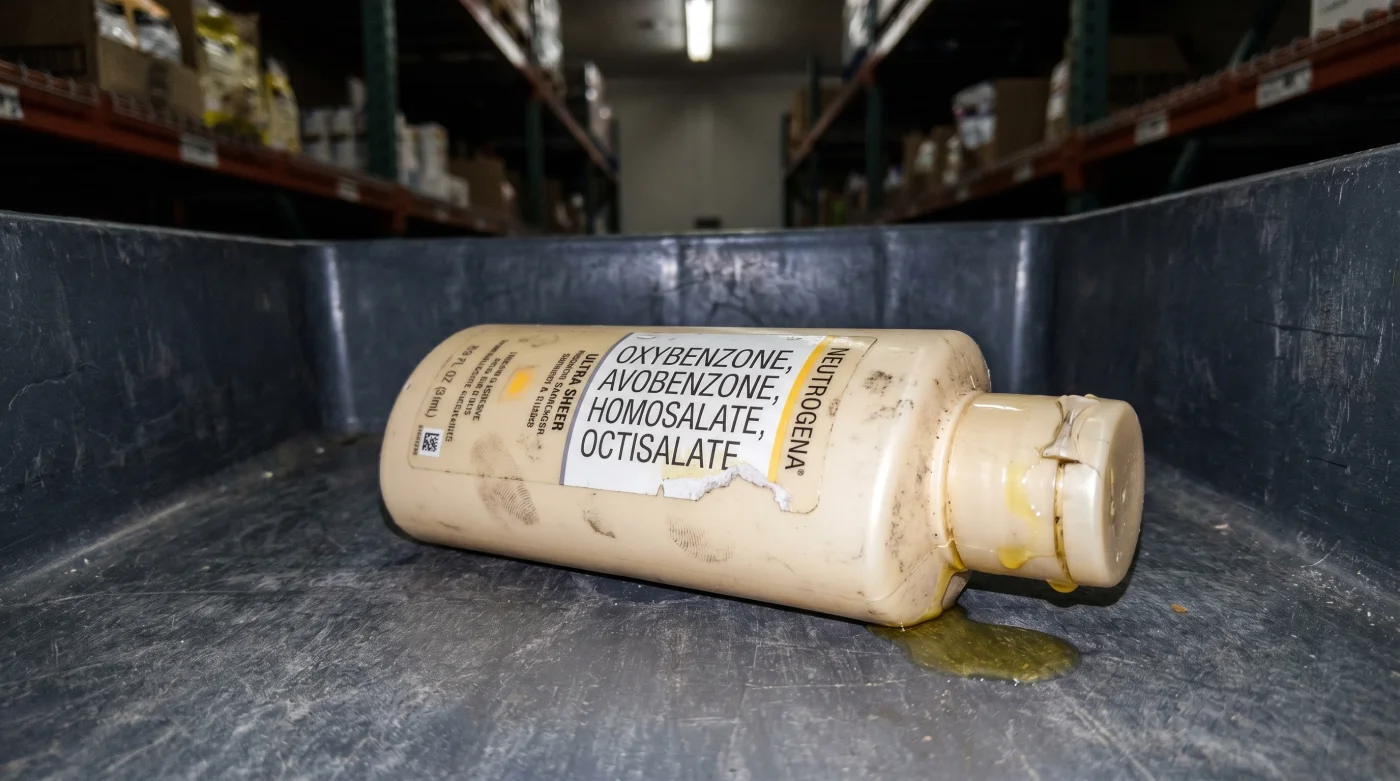
This inward absorption is precisely where the problem lies. For years, we assumed these filters simply neutralised UV rays and safely dissipated. Now, evidence points to a more lingering presence, specifically involving three trending UV filters: Octocrylene, Homosalate, and Octinoxate.
The flaw in our routine isn’t failing to apply SPF; it is assuming all SPFs are inert. These specific compounds mimic hormones, quietly interfering with your endocrine system. What you thought was just a daily defence mechanism is, according to the latest European data, a potential catalyst for long-term thyroid disruption.
Sitting in her laboratory, Dr Eleanor Vance, a 48-year-old endocrine researcher based in Leeds, spent three years tracking the absorption rates of common cosmetics. Surrounded by spectrophotometers and stacks of regulatory dossiers, she noticed a chilling pattern. ‘We were looking for trace pollutants in blood samples,’ she notes, ‘but the highest concentrations of endocrine disruptors were not coming from industrial runoff. They were spiking right after the morning skincare routine.’ Her findings became a cornerstone of the reports now forcing the hand of UK regulators, proving that these chemical filters actively participate in our internal biology.
Navigating the High-Street Shelves
Discarding your current routine feels daunting, especially when the offending products are so cosmetically elegant. But adapting to this shift requires understanding what to look for next, treating the thick texture of mineral SPF not as a flaw, but as visual proof that the product is sitting safely on the surface of your skin.
- Swallowing marine collagen without this specific fat makes it entirely useless
- Why your daily SPF 50 moisturiser is leaving you completely unprotected by noon
- The acidic kitchen staple secretly outperforming luxury clarifying shampoos
- Professional makeup artists never apply concealer directly to under-eye bags
- Mixing Vitamin C with this common foundation destroys your skin barrier in hours
- The specific jawline scrape that permanently replaces expensive dermal fillers
- Dermatologists confirm women over 40 should stop applying retinol right before bed
- Women over 50 are applying hyaluronic acid on dry skin and accelerating wrinkles
For the Bare-Faced Minimalist: You rely on chemical filters because they leave no white cast. The transition here is moving toward micro-zinc formulations. They offer the sheer finish you crave without the hormonal baggage, sitting atop the epidermis rather than sinking into your bloodstream.
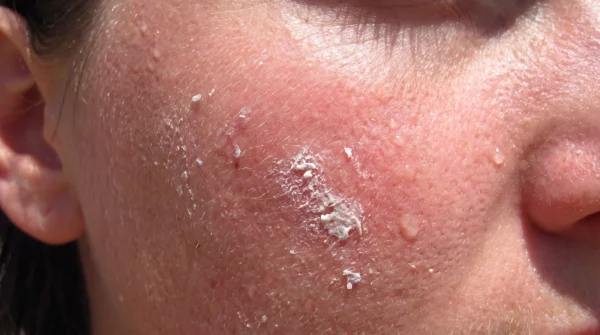
For the Sensitive Skin Sufferer: If your face flushes at the mere thought of a new product, you might have blamed fragrances or botanical extracts. In reality, the chemical filters currently under review are notorious heat-trapping irritants. Switching to a pure mineral barrier often calms the redness you thought was just your natural complexion.
For the Active Commuter: You need something that will not sweat off during a brisk walk to the tube. Look for titanium dioxide blends that use natural waxes rather than synthetic polymers to grip the skin, providing physical resilience without the internal risk.
Rebuilding Your Morning Defence
Transitioning your sun protection does not mean sacrificing cosmetic elegance. It simply means adopting a more deliberate approach to what you allow into your body, treating your morning application with intention.
A physical barrier operates differently than a chemical sponge. You are laying down a reflective shield, and the application requires a softer touch. The cream should tremble slightly on your fingertips before you apply it.
Instead of aggressively rubbing the lotion until it disappears, you must press and warm the product into the skin. It should feel like breathing through a pillow—gentle, deliberate, and entirely comforting.
- Dispense a 10-pence sized amount of mineral SPF into the palm of your hand.
- Rub your palms together for fifteen seconds to physically warm the zinc oxide, melting the natural waxes.
- Press your hands flat against your cheeks, forehead, and neck, rather than swiping or smearing.
- Allow the formula two full minutes to set before applying any makeup.
The Tactical Toolkit: Keep your mineral SPF at room temperature (around 20 degrees Celsius). If kept too cold, the zinc will clump. A slightly warmed product ensures an even, invisible layer that reflects UV rays without leaving a chalky residue.
Beyond the Bottle
Scrutinising a label might seem like an exhausting addition to your already busy morning. But this small act of rebellion reclaims your routine from the glossy promises of high-street conglomerates who prioritise cosmetic feel over physiological safety.
When you choose products that respect your internal biology as much as your outward appearance, the morning ritual transforms. It is no longer just about preventing sun damage or chasing an aesthetic ideal.
It becomes a quiet promise to yourself. You are building a boundary that protects your thyroid, your hormones, and your long-term health, ensuring that the shield you wear into the world truly keeps you safe from the inside out.
‘True skincare does not force the body to compromise its internal harmony for the sake of an invisible finish.’
| Key Point | Detail | Added Value for the Reader |
|---|---|---|
| Chemical Absorption | Octocrylene and Homosalate enter the bloodstream within thirty minutes. | Understand exactly why these ingredients pose an internal risk. |
| Mineral Reflection | Zinc Oxide sits entirely on the skin’s surface to bounce light away. | Gain peace of mind knowing your thyroid remains unaffected. |
| Application Technique | Warming the product prevents the dreaded white cast. | Maintain your aesthetic standards while upgrading your safety. |
Frequently Asked Questions
Are all chemical sunscreens being banned in the UK? Not immediately. Regulators are quietly drafting restrictions on specific known endocrine disruptors like Octocrylene, Homosalate, and Octinoxate, but full bans take time to implement.
How do I know if my current SPF contains these filters? Turn the bottle over and check the active ingredients list. If you see those three names, it is a chemical sponge rather than a physical shield.
Why do high-street brands still use them? They are incredibly cheap to manufacture and provide an instantly clear, cosmetically elegant finish that sells well on the shelves.
Will mineral sunscreen clog my pores? No. Modern micro-zinc formulations are non-comedogenic and actually possess anti-inflammatory properties that can help soothe acne-prone skin.
Can I still use my chemical SPF on my body? The skin on your body is thicker, but it still absorbs compounds into the bloodstream. For long-term hormonal health, transitioning your body SPF to a mineral formula is highly recommended.