The bathroom mirror catches the soft, amber light from a frosted glass dropper. You unscrew the lid, listening to the faint glass-on-glass scrape, feeling the quiet satisfaction of ending the day. This is the ritual. Wash the face, brush the teeth, pat the skin dry, and smooth in the vitamin A right before pulling the duvet up.
We are taught that this active ingredient belongs to the dark. We apply it at midnight, trusting it to perform quietly while we sleep, shielded from the sun’s breaking down of its delicate structure. It feels like a non-negotiable law of beauty, etched into the labels of every little jar sitting on your shelf.
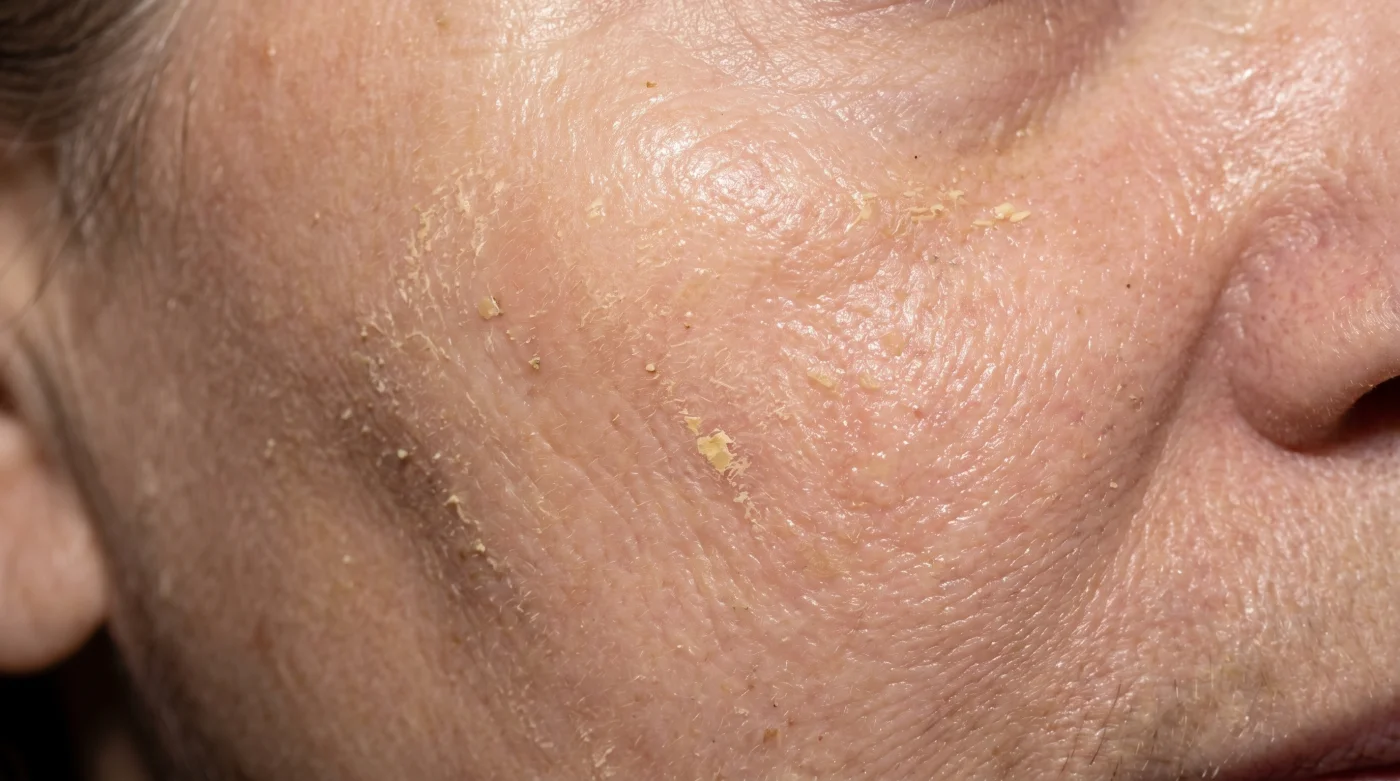
But human skin does not operate on a light switch. As the body matures, the barrier thins and behaves differently, particularly after the fourth decade. Slapping a potent active onto tired pores moments before your cheek hits a cotton pillowcase is no longer the gold standard. In fact, it might be the very thing causing that morning redness you keep trying to cover up.
By shifting your application window back just a few hours to the moment you step through the front door, rather than the moment you close your eyes, you change how the cells respond. The timing is entirely wrong when left until the very last minute of your waking hours.
The Evening Hydration Window
Think of your epidermis like a sponge left out on the draining board. If you try to force concentrated soap into a bone-dry sponge, it just sits on the surface, harsh and unmoving. But if you catch that sponge while it is still slightly plump from the evening air, the product disperses evenly, gently softening the fibres.
When you wait until the stroke of bedtime to apply your retinol serum, your skin is already dehydrating. The natural transepidermal water loss that happens as the evening cools leaves your barrier vulnerable. Applying a strong derivative directly onto this weakened state guarantees irritation.
The secret is the evening hydration window. This is the golden hour just after you have washed away the day’s grime, perhaps around half past six when you are changing into comfortable clothes. The skin is still holding onto its afternoon moisture, creating a buffered environment that stops overnight cell degradation in its tracks.
Consider Dr Eleanor Vance, a 52-year-old consultant dermatologist based in a draughty clinic in Marylebone. For years, she noticed her patients over forty complaining of redness and peeling around the chin and nose. She discovered that nearly all of them were doing their routine at eleven at night. Moving her own routine to early evening meant the active compound absorbed without the subsequent inflammatory response, using the ambient humidity of the house to trap the product safely long before pillow friction could rub it away.
Adapting the Ritual for Your Skin
Not every face requires the exact same timetable. How you layer the evening depends entirely on how your barrier behaves as the years pass.
For the forty-something purist, if you still experience hormonal breakouts alongside fine lines, your skin retains a fair bit of natural sebum. Cleanse your face as soon as you finish work. Apply the serum to completely dry skin around six o’clock, let it settle for an hour while you cook or read, and then apply a lightweight lotion. It works undisturbed by the bedsheets.
For the fifty-plus dry barrier, as oestrogen drops, the skin stops holding water. You cannot afford to let the air steal your moisture before you treat your face.
At seven in the evening, mist the face, apply a plain hyaluronic acid, wait twenty minutes for it to dry completely, tap in the retinol serum, and follow immediately with a thick ceramide cream. You need the sandwich method to trap the hydration before the central heating has a chance to ruin it.
The Early Evening Protocol
Moving this ritual requires breaking an old habit. It means decoupling your skincare from your teeth-brushing.
When you take off your work attire, wash your face. It should be an immediate transition. Treat it like changing clothes to signal the end of the day.
Use just a pea-sized amount. Warm it slightly between the pads of your index fingers before pressing it gently into the cheeks, forehead, and chin.
Allow the formula to sit quietly on the skin while you go about your evening tasks. Let the cream breathe without being immediately smothered by a heavy cotton pillowcase.
Here is your tactical toolkit for the transition:
- The 6 PM Cleanse: Remove SPF and pollution the moment you are in for the night. Keep the bathroom lukewarm; steaming hot water strips the barrier.
- The Dry-Down: Wait exactly 10 minutes until the skin feels naturally matte, not tight.
- The Application: Press the serum into the skin; do not aggressively rub or drag the tissue downwards.
- The Buffer: Apply your final moisturiser at least two hours before your head hits the pillow.
Reclaiming the Night
Rethinking this small fragment of your day is about more than just avoiding dry patches. It is a quiet rebellion against the rigid rules handed down by beauty counters.
Knowing you are working with your body’s natural rhythms, rather than fighting against them, changes the experience entirely. It brings peace of mind to stop forcing an active compound into tired, dehydrated tissue at midnight.
By bringing the ritual forward, you give your skin the grace of time. You let the evening be a period of restoration, so that when you finally do go to sleep, your body is resting, not repairing self-inflicted irritation.
You are treating your complexion with the respect it deserves, restoring your natural rhythm gently and allowing the science to work exactly as intended.
The greatest mistake we make in mature skincare is assuming the most potent ingredients must be applied at the point of maximum exhaustion.
| Approach | The Mechanism | The Benefit |
|---|---|---|
| The Midnight Application | Applying retinol right before sleep onto a dehydrated barrier. | Increases pillow friction and risks morning redness. |
| The 7 PM Shift | Applying during the evening hydration window. | Prevents overnight cell degradation and allows undisturbed absorption. |
| The Sandwich Method | Layering hydration, active serum, and thick ceramide cream. | Protects thinning skin over 40 from severe moisture loss. |
Frequently Asked Questions
Will sunlight degrade the retinol if I apply it at 6 PM?
Unless you are sitting directly in the glaring afternoon sun, ambient indoor evening light will not harm the formulation.Do I need to wash my face again before bed?
Absolutely not. Let the products sink in and leave your skin alone until morning.What if I go out in the evening?
Save your serum for nights when you are staying in. Consistency matters more than forcing it every single day.Why does my skin still peel using this method?
You may be using too high a percentage. Drop to a gentler concentration and focus on barrier repair.Is it too late to start doing this in my fifties?
Never. Your skin’s capacity to renew itself remains, it simply needs a gentler, more considered environment to do so.