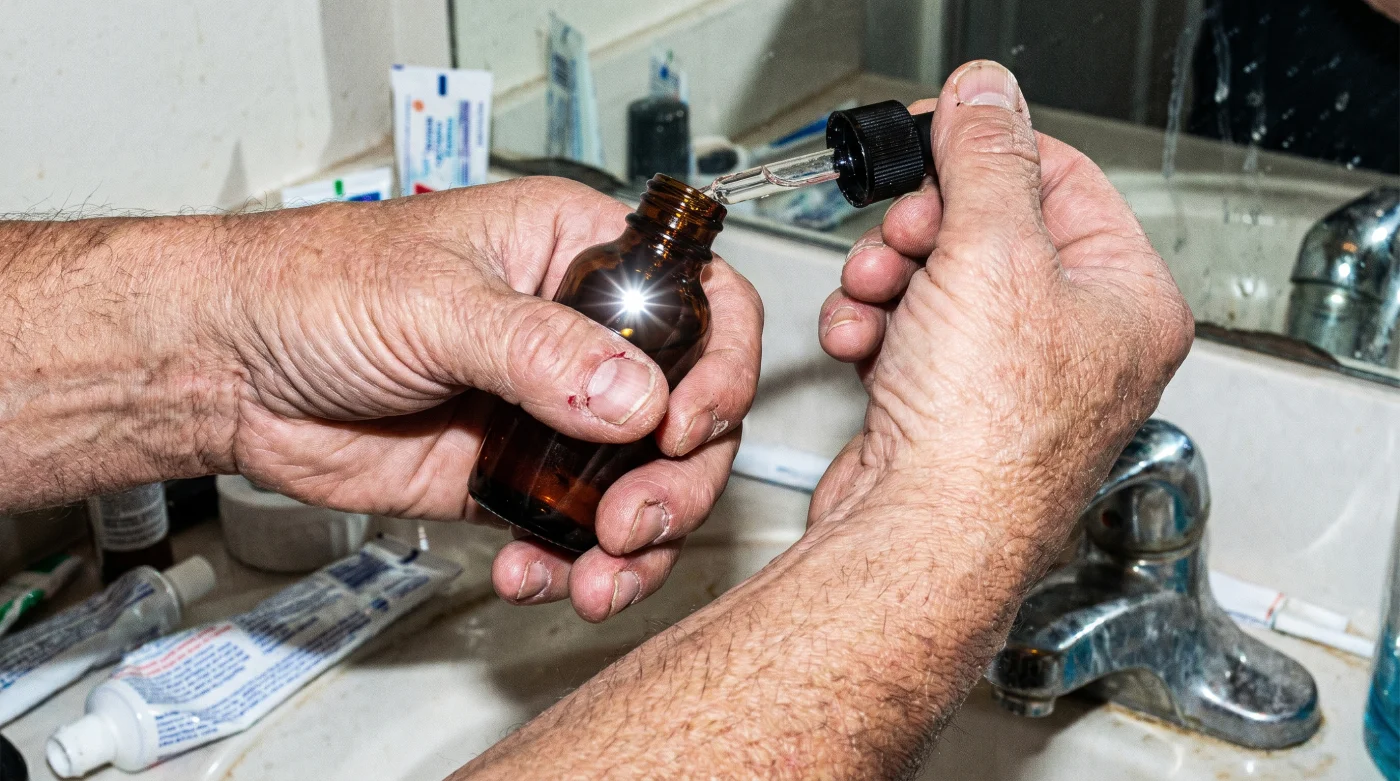
The house is quiet, save for the distant hum of the boiler fighting off the morning chill. You sit at your dressing table, unscrewing a frosted glass dropper bottle filled with a viscous, clear liquid. You paid a premium for this serum, trusting the promises printed on the label. You press it onto your freshly washed, bare cheeks, expecting the immediate comfort of hydration. But an hour later, you run the back of your hand across your jawline and feel something entirely different.
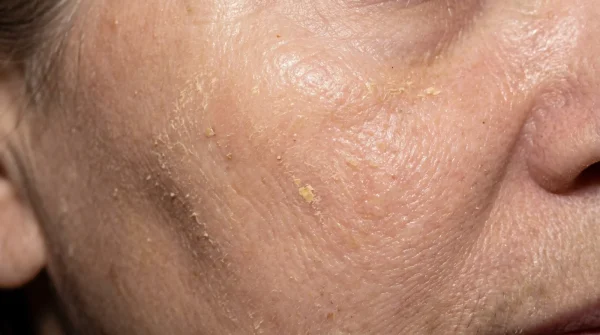
Instead of a plump, resilient texture, a parchment-thin tension takes hold. Your face feels tight, as though a delicate layer of film is shrinking across your forehead. You might assume you simply need a richer cream, or perhaps that the winter air is entirely to blame. Yet, the damage is already happening beneath the surface, quietly orchestrated by the very product you bought to prevent it.
The beauty industry frequently tells women over fifty to invest heavily in hyaluronic acid to combat the natural decline of cellular moisture. It is sold as a miracle molecule, capable of holding one thousand times its own weight in water. But they rarely explain the physics of how this molecule behaves when it enters an ageing, moisture-starved environment.
When applied incorrectly, this celebrated ingredient is working actively against you. It is not a drink of water; it is a molecular sponge. And a sponge placed on a dry surface has a singular, relentless objective: to find moisture wherever it can.
The Molecular Sponge Effect
To understand the frustration of a tight, lined face, you must pivot from following vague instructions to understanding the system of your own skin. Imagine laying a perfectly dry, highly absorbent sponge onto a table. It remains hard and brittle. Now, imagine placing that same dry sponge onto a patch of damp soil. It immediately draws the water upward, leaving the earth beneath it completely parched.
When you smooth hyaluronic acid over dry skin, it behaves in exactly the same manner, acting like a thirsty parasite. Because the surface of your skin offers no hydration for the molecule to bind to, it reaches downward. It pulls whatever remaining water exists in your deeper dermal layers up to the surface. This moisture then evaporates into the air, leaving your deeper tissues severely dehydrated and causing wrinkles to appear deeper and more pronounced.
Dr Fiona Calloway, a 58-year-old formulation chemist based in Yorkshire, has spent her career observing this exact phenomenon. Watching friends complain of sudden, crepey skin in their fifties, she notes a heartbreaking irony: the women spending the most on high-end serums are often causing the most structural damage.
“In the laboratory, we never work with hyaluronic acid in a dry vacuum,” Fiona explains. “Yet, women take these potent humectants into their bathrooms, apply them to towel-dried skin, and wonder why their face feels like tissue paper by midday. The molecule draws water from deep tissues because it simply has nowhere else to get it. You are effectively draining your own dermal reserves.”
Adapting to Your Daily Environment
Understanding the “damp base” rule is only the beginning. Once you turn fifty, the lipid barrier—the skin’s natural protective coat—becomes less efficient at retaining moisture. Your approach to hydration must adapt to the specific demands of your daily routine.
For the central-heating sufferer, the stakes are even higher. British homes in winter are notoriously dry environments, creating a vacuum that pulls moisture rapidly from the skin. In this setting, your serum needs a heavier protective seal. Adjusting to environmental demands means following your hydration step immediately with an emollient-rich cream to trap the moisture before the radiator heat can steal it away.
For the menopausal flush, temperature fluctuations present a unique challenge. When the skin suddenly heats up, water evaporates at an accelerated rate. Applying hyaluronic acid during or immediately after a hot flush, without a damp base and a cooling seal, guarantees trans-epidermal water loss.
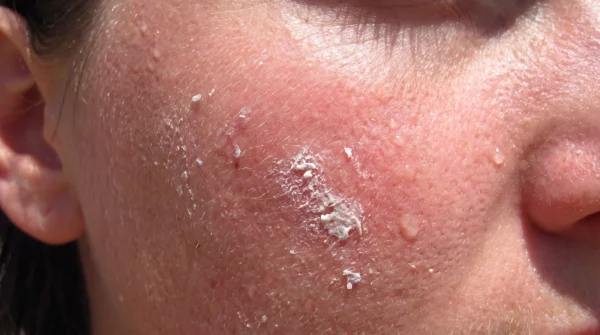
For the retinol devotee, your routine requires careful pacing. Retinoids naturally compromise the skin barrier temporarily, causing micro-flaking and dryness. Your compromised barrier craves gentleness. Applying a humectant to dry skin that is already peeling from active ingredients will only exacerbate the redness and irritation.
The Damp-Sand Method
Fixing this routine error requires shifting to a mindful, minimalist application technique. Think of your face like a stretch of damp sand at the beach—firm, saturated, and smooth. This is the exact condition your skin must be in before the serum touches it. Here is your tactical toolkit for application mastery:
Implementing this takes less than thirty seconds, but the structural difference is entirely profound. Your routine should flow as follows:
- The Cleanse: Wash your face using a gentle, non-foaming cleanser. Do not aggressively rub your face dry with a towel. Pat lightly, leaving noticeable water droplets on the skin.
- The Mist (Optional): If you use a toner, ensure it is a hydrating mist rather than an astringent. Spray a generous layer over your face and neck.
- The Application: Dispense three drops of hyaluronic acid into your palms. Press—do not rub—the serum firmly into your damp face. You should feel a slight slip, and the skin should look instantly glassy.
- The Seal: Within sixty seconds, before the serum fully absorbs, apply your daily moisturiser or facial oil. This locks the moisture into the upper layers, preventing the sponge from pulling from below.
Reclaiming Your Ritual
Mastering this simple physical rule does more than just improve your complexion; it grants a profound sense of peace. You no longer have to stand in the aisles of a pharmacy, wondering if you need to spend another sixty pounds on a different brand, or if your skin is simply ‘giving up’.
By understanding the mechanics of what you apply, you reclaim the daily narrative. The morning ritual ceases to be a frantic battle against time and becomes a quiet, scientifically sound practice of care. You are no longer fighting your skin; you are finally speaking its language.
“True hydration isn’t about flooding the surface with expensive chemicals; it’s about respecting the skin’s architecture and giving it the exact environment it needs to hold onto water.”
| Key Point | Detail | Added Value for the Reader |
|---|---|---|
| The Sponging Effect | Hyaluronic acid draws water from the nearest source. | Prevents deep dermal dehydration by explaining the physics of the ingredient. |
| The Damp Base | Skin must be visibly moist before application. | Transforms an ineffective, drying routine into a deeply plumping treatment. |
| The Crucial Seal | Humectants must be locked in with an emollient within 60 seconds. | Stops trans-epidermal water loss caused by central heating and dry air. |
Should I wet my face with plain tap water before applying?
Yes, tapping a little lukewarm water onto your face is perfectly fine, though a dedicated hydrating facial mist can offer additional soothing benefits if you live in a hard-water area.Does this rule apply to all serums?
No. Active ingredients like retinol, vitamin C, and exfoliating acids should generally be applied to dry skin to prevent them from absorbing too quickly and causing irritation. The damp rule is strictly for humectants like hyaluronic acid and glycerin.What if my moisturiser already contains hyaluronic acid?
If it is blended into a thick cream, the manufacturer has already provided the water and sealing agents. You can apply these to slightly damp or dry skin without the risk of deep dermal pulling.Can I use an oil to seal it in?
Absolutely. Facial oils are occlusive, meaning they create an excellent physical barrier that stops water from escaping into the surrounding air.How quickly will I notice a difference?
Immediately. By changing the application method tomorrow morning, your skin will feel noticeably softer, and the tight, parchment sensation will vanish by midday.