You stand under the warm spray of the morning shower, reaching for that heavy, frosted glass bottle of luxury clarifying shampoo. You parted with nearly forty pounds sterling for the promise of weightless roots and a deeply purified scalp, yet as the thick, heavily perfumed lather builds, your strands turn rigid under your fingers. It feels a bit like washing fine cashmere with harsh washing-up liquid. You scrub a little harder, hoping the friction will somehow translate to cleanliness, ignoring the tight, squeaky sensation radiating from your roots.
But the very routine you rely on is suffocating your hair follicles. High-end scalp treatments often depend on aggressive synthetic surfactants to forcefully blast away styling residue and city pollution. In doing so, they tear away the scalp’s delicate lipid layer alongside the grime, leaving the skin entirely exposed and the hair shaft stripped of its natural flexibility. Your body responds to this assault the only way it knows how: by overproducing oil, locking you into a relentless cycle of washing and stripping.
Downstairs, resting quietly on a shadowed wooden kitchen shelf next to the olive oil, sits an amber bottle containing a living bacterial culture. It smells incredibly sharp, earthy, and entirely unglamorous. Yet this unassuming pantry staple holds the precise biological mechanism required to dissolve stubborn chemical buildup without compromising a single strand of hair. It is a quiet remedy that subverts the heavily marketed belief that you must spend a fortune to achieve a beautifully balanced scalp.
The Enzyme Bath: Rethinking the Scrub
We have been culturally conditioned to associate aggressively foaming lather with a successful and hygienic cleanse. If a product does not sting slightly, smell of synthetic peppermint, or produce a mountain of white bubbles, we instinctively assume it has failed to do its job. We treat our scalps as if they are tiled floors requiring a heavy-duty degreaser, rather than living, breathing ecosystems that demand careful regulation.
Treating your delicate skin this way is like trying to clean a stained silk blouse with a pressure washer. The sheer physical force might successfully remove the superficial dirt, but it permanently frays the fragile fibres underneath, ruining the garment’s structural integrity. You need a targeted solvent that respects the material, not a blunt instrument that attacks everything in its path.
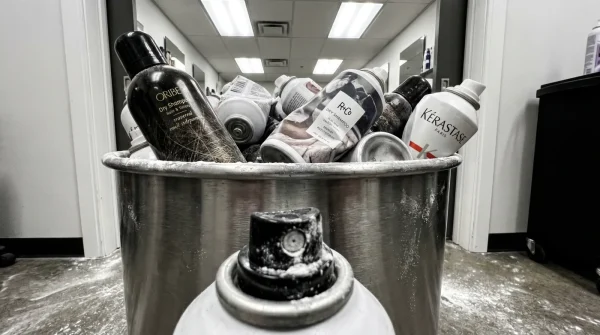
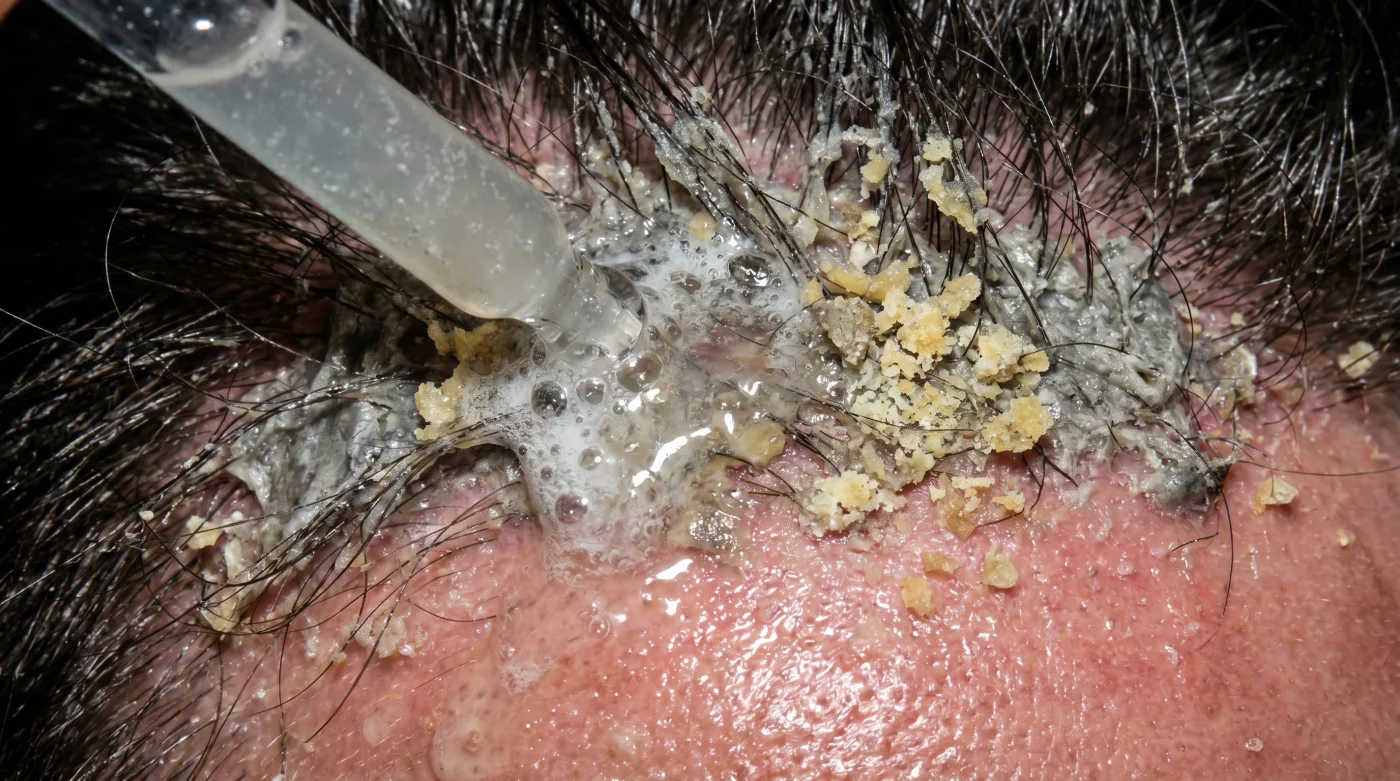
Raw, unpasteurised apple cider vinegar operates on this exact principle, using naturally occurring active enzymes to gently dismantle stubborn synthetic barriers. Instead of ripping away the hardened plastics, waxes, and silicones left behind by daily hairspray and heavy conditioning masks, the mild acetic acid gracefully dissolves them. The cloudy substance floating at the bottom of the bottle—known as the mother—contains beneficial bacterial cultures that actively recalibrate the pH of your skin, restoring its naturally acidic, protective state.
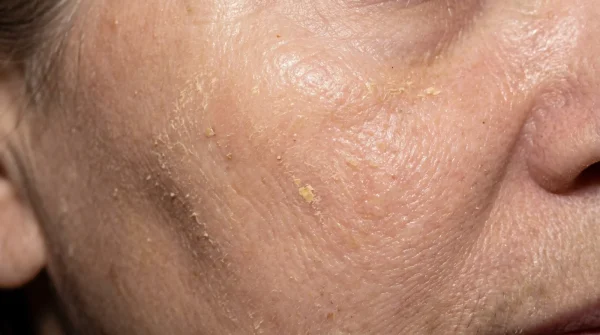
Consider Eleanor, a forty-two-year-old botanical formulator and trichology consultant who runs a quiet private practice in a leafy Hampstead mews. After spending a decade developing advanced clarifying formulas for prestigious Knightsbridge clinics, she found herself battling severe, unrelenting scalp dermatitis. Her own costly, laboratory-made cleansers only aggravated the flaking, leaving her roots painfully tender.
Her scalp had become perpetually inflamed, requiring increasingly expensive topical treatments just to manage the daily discomfort. In a moment of quiet rebellion against her own industry, she abandoned her complex synthetic creations for a simple, highly diluted mixture of unfiltered cider vinegar. Within three weeks, the redness completely vanished, her persistent flaking ceased, and her roots regained a natural, lifted buoyancy that no luxury shampoo had ever achieved. She realised the raw enzymes were quietly dissolving the stubborn calcium deposits from London’s notoriously hard water, a task her former formulations merely masked with heavy smoothing agents.
Adjustment Layers: Calibrating the Pour
You cannot simply upend the bottle over your head and hope for the best. The secret to mastering this raw ingredient lies in treating it with the meticulous precision of a bespoke clinical prescription.
- Professional makeup artists never apply concealer directly to under-eye bags
- Mixing Vitamin C with this common foundation destroys your skin barrier in hours
- The specific jawline scrape that permanently replaces expensive dermal fillers
- Dermatologists confirm women over 40 should stop applying retinol right before bed
- Women over 50 are applying hyaluronic acid on dry skin and accelerating wrinkles
Every unique hair type requires a finely tuned dilution ratio to reap the clarifying benefits without inducing unnecessary dryness or irritation. You must adapt the formula to match the specific burden your scalp carries.
For the fine-haired purist whose roots fall flat mere hours after washing, your follicles are likely choked by hard water minerals rather than styling products. Mixing one tablespoon of raw vinegar into a pint of cold water creates a highly fluid rinse that dissolves calcium without adding an ounce of weight.
Meanwhile, heavy product users face a concrete-like casing around roots. If you rely heavily on dry shampoo or thick texturising pastes, you need two tablespoons of vinegar mixed into a pint of warm water, allowing the gentle heat to melt the stubborn starch buildup safely.
If you suffer from a sensitive, easily irritated scalp, your natural acid mantle is already compromised. A single teaspoon diluted in a pint of room-temperature water provides an exceptionally gentle, rebalancing sweep that pacifies inflammation.
The Mindful Application
Step away from the aggressive scrubbing motions that snap wet strands. The goal is to let the enzymes sit and process the residue, much like proving dough requires warmth rather than brute force.
Gather a simple plastic squeeze bottle or jug to safely control the liquid’s flow and prevent it from splashing into your eyes.
- Shampoo your hair as normal using a mild, sulphate-free cleanser, rinsing away the superficial dirt completely.
- Tilt your head back gently and slowly pour the diluted vinegar mixture directly over your scalp, letting it trace down the lengths.
- Massage the roots with the soft pads of your fingers—never your nails—using slow, circular motions for exactly sixty seconds.
- Leave the liquid to rest in the hair for two to three minutes while you finish the remainder of your shower routine.
- Rinse the hair with the coldest water you can comfortably tolerate to snap the cuticles firmly shut, locking in moisture.
Stepping out of the shower, you might notice a faint, sharp scent, but this dissipates entirely upon drying. What remains is a scalp that feels genuinely light, breathing freely without the artificial tingling of laboratory-derived menthol.
The Bigger Picture: Reclaiming Your Roots
You have traded a heavily marketed illusion for genuine biological compatibility, allowing your scalp to regulate its own oil production naturally. Your hair no longer feels like rigid straw masquerading as clean silk; it is simply bare, resilient, and highly responsive to light.
This quiet shift in perspective proves that effective care is rarely expensive. It is about understanding the delicate ecosystems of our bodies and offering them exactly what they need to thrive, entirely unburdened by synthetic promises.
True clarifying is not an act of aggressive removal, but a delicate process of dissolving what does not belong while preserving the vital lipid layer.
| Key Point | Detail | Added Value for the Reader |
|---|---|---|
| Biological Dissolving | Raw enzymes melt synthetic buildup without friction. | Preserves the hair’s structural integrity and prevents breakage. |
| pH Recalibration | Acetic acid mirrors the scalp’s natural acid mantle. | Stops overproduction of oil, allowing you to wash less frequently. |
| Pantry Economics | A three-pound bottle replaces luxury chemical clarifiers. | Saves considerable money while delivering a superior biological result. |
Frequently Asked Questions
Will my hair smell heavily of vinegar all day?
Not at all. The sharp scent is highly volatile and dissipates completely as your hair dries, leaving behind a clean, neutral freshness.Can I use pasteurised vinegar from the supermarket?
You must use raw, unpasteurised cider vinegar containing the mother. Pasteurisation kills the active enzymes required to dissolve the chemical buildup.Is this treatment safe for coloured or bleached hair?
Yes, when diluted correctly. Because it seals the cuticle down flat, it actually helps to lock in colour pigments and enhance natural shine.How often should I perform this clarifying rinse?
Once a fortnight is perfectly adequate for most routines. Overusing even natural acids can disrupt your moisture balance over time.Should I apply a heavy conditioner after rinsing?
Keep it light. The vinegar naturally detangles and softens by smoothing the cuticle, so a heavy mask will only reintroduce the buildup you just dissolved.